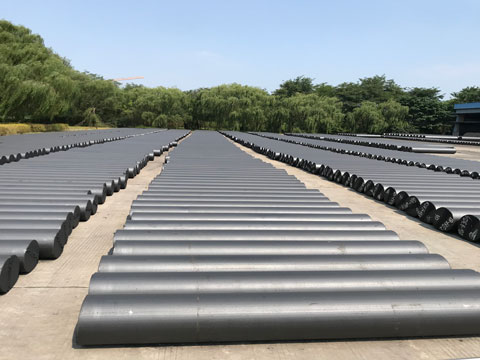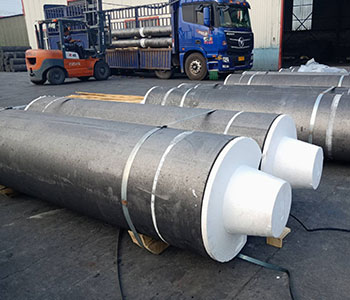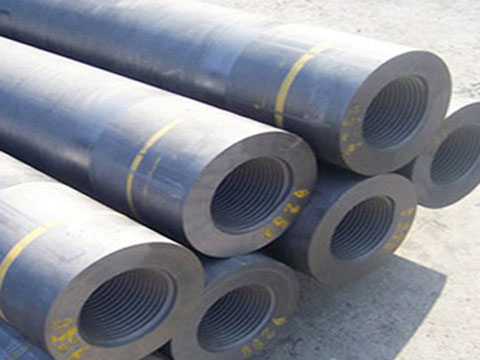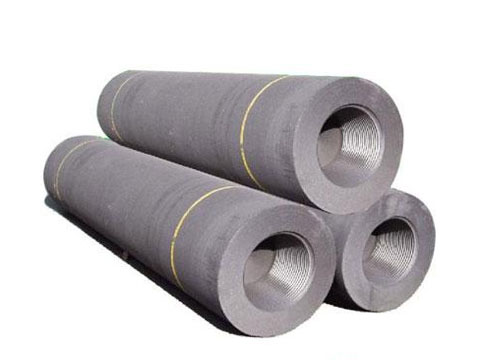
The Price-Performance Puzzle: Cheap RP Graphite Electrode Options, What Graphite Electrode Used For, and Finding a Graphite Electrode UHP 300 Factory. Every procurement professional faces the same tension: balancing upfront cost against long-term performance. In the world of electric arc furnace steelmaking, this tension plays out daily around a single question—should I buy the cheapest electrode available, or invest in higher quality for lower consumption?
At Rongsheng Graphite Electrodes Manufacturer, we’ve helped hundreds of melt shops answer this question. This article addresses three specific search intents: the reality behind cheap rp graphite electrode offers, a clear explanation of graphite electrode used for across different applications, and what to look for when sourcing from a graphite electrode uhp 300 factory. By the end, you’ll understand when “cheap” works, when it doesn’t, and how to match grade and diameter to your actual furnace needs.
Cheap RP Graphite Electrode: What Does “Cheap” Really Mean?
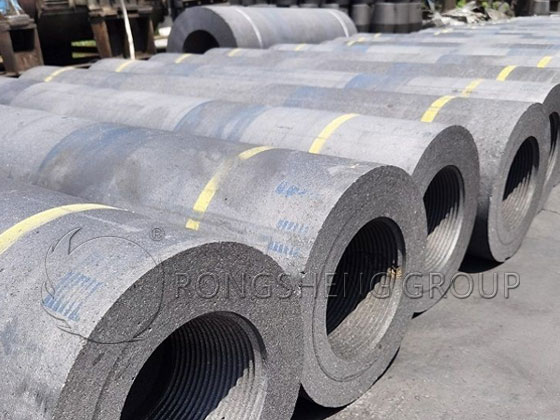
Let’s start with the most searched but most misunderstood keyword: cheap RP graphite electrode. Every buyer wants a good deal. But “cheap” can mean two very different things:
Scenario A: Genuine value – A factory-direct RP electrode with consistent specifications, sold at a fair margin without trader markups. This is cheap in price but not in quality.
Scenario B: False economy – A low-quality electrode made from poor needle coke, with rushed graphitization and loose tolerances. This appears cheap upfront but costs more per ton of steel produced.
How to spot genuine cheap RP graphite electrode offers:
| Indicator | Value Offer (Good) | Trap Offer (Bad) |
|---|---|---|
| Price per ton | 10–15% below market average | 30–40% below market average |
| Supplier type | Factory-direct or exclusive distributor | Trader with multiple brand names |
| Specifications provided | Full data (resistivity, strength, density) | Vague claims (“high quality,” “premium grade”) |
| Batch traceability | Yes, with test records | No, or “available upon request” (never provided) |
| Lead time | 20–30 days (reasonable) | 7 days (suspect—likely old stock or different grade) |
When does a cheap RP graphite electrode make sense?
-
Your furnace operates below 15 MVA
-
Your tap-to-tap times exceed 90 minutes (less thermal stress)
-
You’re melting low-demand materials (pig iron, certain ferroalloys)
-
You have a robust electrode handling and storage process
When does cheap RP become expensive?
-
Breakage rates exceed 5% (each break costs 2–3 hours of downtime)
-
Consumption rises above 2.2 kg per ton of steel
-
You need to replace electrodes mid-campaign due to oxidation
Rongsheng offers competitively priced RP graphite electrodes from our own factory. We don’t claim to be the absolute cheapest—because the absolute cheapest usually compromises somewhere. But we deliver documented value at fair prices.
Graphite Electrode Used For: A Complete Application Guide
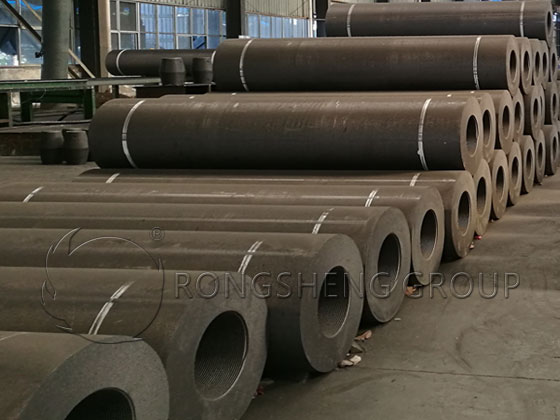
Understanding graphite electrode used for different applications helps you avoid over-specifying (wasting money) or under-specifying (wasting electrodes). Here’s the complete breakdown:
Primary Application: Electric Arc Furnace (EAF) Steelmaking
-
What it does: Conducts electricity to create arcs that melt scrap steel
-
Typical diameter: 300mm to 700mm
-
Typical grade: RP, HP, or UHP depending on transformer power
-
Consumption range: 1.2–2.5 kg per ton of steel
Secondary Application: Ladle Refining Furnace (LRF)
-
What it does: Maintains temperature and enables alloy adjustment after tapping
-
Typical diameter: 250mm to 450mm (smaller than EAF)
-
Typical grade: HP or UHP (stable arc required)
-
Consumption range: 0.3–0.8 kg per ton of steel
Tertiary Application: Submerged Arc Furnace (SAF)
-
What it does: Produces ferroalloys (silicon metal, ferrosilicon, silicon manganese)
-
Typical diameter: 500mm to 800mm (larger than EAF)
-
Typical grade: RP or HP (lower current density)
-
Consumption range: 2.0–4.0 kg per ton of product
Specialty Applications for Graphite Electrode Used For:
-
Graphitization furnaces – Producing synthetic graphite from carbon materials
-
Silicon carbide production – High-temperature synthesis
-
Phosphorus furnaces – Elemental phosphorus extraction
-
Foundry cupolas – Smaller-scale melting
What graphite electrode used for in each case determines the required properties. EAF needs thermal shock resistance. LRF needs arc stability. SAF needs large diameter for deep burial. Rongsheng produces electrodes for all four categories.
Graphite Electrode UHP 300 Factory: What to Look For
Now let’s focus on a specific, high-demand product: the 300mm UHP electrode. When searching for a graphite electrode uhp 300 factory, you need to verify five capabilities:
1. Needle coke sourcing for UHP
UHP requires the highest grade of calcined needle coke with specific crystallite orientation (Lc > 32 nm). A genuine graphite electrode uhp 300 factory can identify their coke sources and provide import documentation.
2. Double impregnation capacity
UHP grade requires two full impregnation cycles. Ask: Do you have autoclaves rated for vacuum impregnation? What is your typical pitch pickup percentage? Rongsheng achieves 12–14% pitch pickup per impregnation.
3. Graphitization furnace access
UHP demands 2800–3000°C treatment. A factory without on-site graphitization (some outsource this step) cannot control final resistivity. Rongsheng operates 12 Acheson furnaces with programmable power profiles.
4. 300mm-specific tooling
300mm is a common diameter, but not all factories maintain dedicated dies and thread tooling. Worn tooling produces oval electrodes or loose threads. We replace extrusion dies every 1,000 tons and CNC thread cutters every 500 pieces.
5. Ultrasonic testing for every electrode
UHP electrodes cannot have internal fissures. A 1mm crack under thermal cycling becomes a 10mm crack within 10 heats. Rongsheng scans 100% of UHP production. Many factories scan only sample batches.
Why 300mm UHP specifically? This diameter serves a sweet spot: large enough for 50–80 ton EAFs, small enough for efficient handling. UHP grade at 300mm delivers current density of 25–30 A/cm²—ideal for furnaces with 20–30 MVA transformers.
Common Questions About These Keywords
Q: Is a cheap RP graphite electrode always a bad idea?
A: No. If your furnace truly operates at low power and you have good handling practices, a value-priced RP electrode makes sense. The key is verifying that “cheap” means factory-direct pricing, not quality cuts.
Q: What is graphite electrode used for besides steelmaking?
A: Ladle furnaces, submerged arc furnaces for ferroalloys, silicon metal production, phosphorus furnaces, and specialty graphitization processes.
Q: How do I verify a graphite electrode UHP 300 factory?
A: Request batch test records for resistivity, flexural strength, and bulk density. Ask about the ultrasonic testing frequency. Tour the facility if possible.
Why Rongsheng Fits All Three Keywords
Rongsheng delivers across the spectrum:
-
Cheap RP graphite electrode – Factory-direct pricing without quality compromise
-
Graphite electrode used for – We supply all applications: EAF, LRF, SAF, and specialty
-
Graphite electrode UHP 300 factory – Full UHP production with 100% ultrasonic testing
We don’t push you toward the most expensive option. We analyze your furnace and recommend the grade that minimizes your total cost per ton.
Rongsheng RP Graphite Electrode Manufacturer
The search for a cheap RP graphite electrode is really a search for value. Understanding the graphite electrode used for your specific furnace type ensures correct grade selection. And finding a genuine graphite electrode UHP 300 factory guarantees UHP performance when you need it.
Rongsheng offers all three—with transparency, documentation, and technical support.
Stop guessing between cheap and quality. Contact Rongsheng today with your furnace specifications, and we’ll return a grade recommendation, a sample batch test record, and a factory-direct price quote.