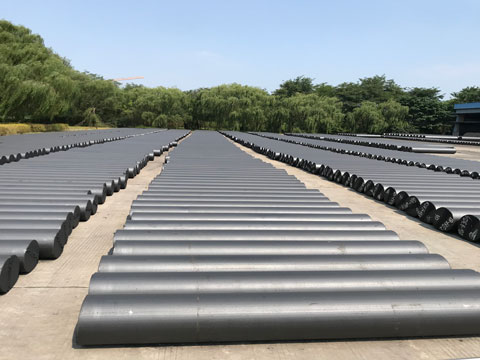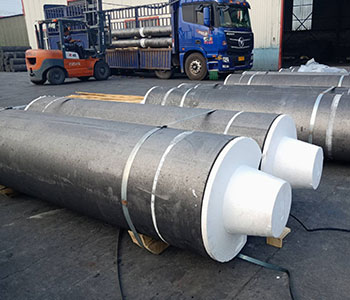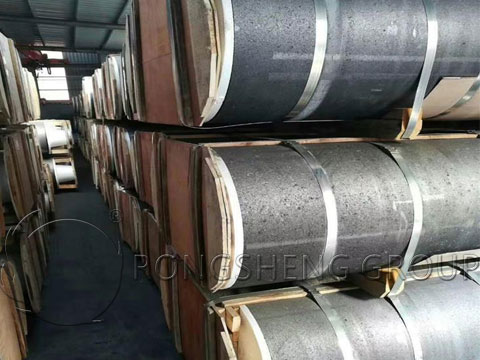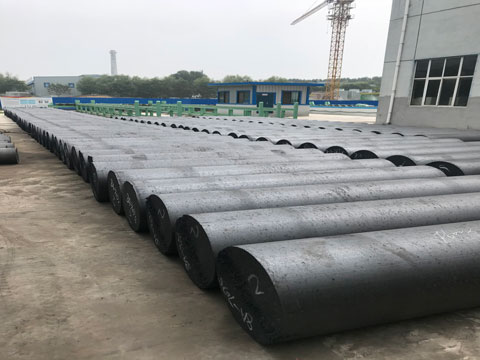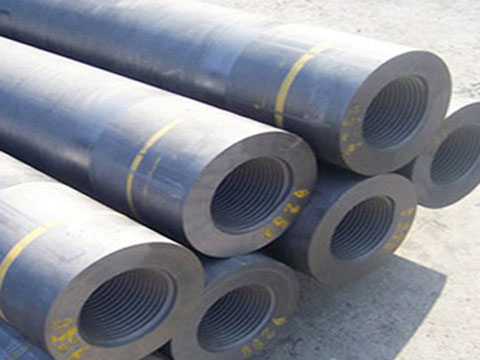
Defining the Undefined: Carbon Electrodes Meaning, UHP Graphite Electrode Price Drivers, and What Pencil Graphite Electrode Means. In the world of electrothermal processing, few terms cause as much confusion as the word “electrode” itself. Ask five different people what an electrode means, and you might get five different answers—ranging from a laboratory pencil lead to a 700mm diameter industrial column weighing several tons.
At Rongsheng Graphite Electrodes Manufacturer, we encounter this confusion regularly. Procurement professionals ask about carbon electrodes meaning versus graphite. Financial planners want to understand the UHP graphite electrode price volatility. And students (or hobbyists) search for pencil graphite electrode means for small-scale experiments. This article clarifies all three—providing clear definitions, market context, and practical applications for each term.
Carbon Electrodes Meaning: Graphite vs. Carbon vs. Other Materials
Let’s start with the most fundamental question: carbon electrodes meaning—what exactly does this phrase refer to?
In strict materials science terms, “carbon electrode” encompasses any electrode where carbon is the primary conductive component. This includes:
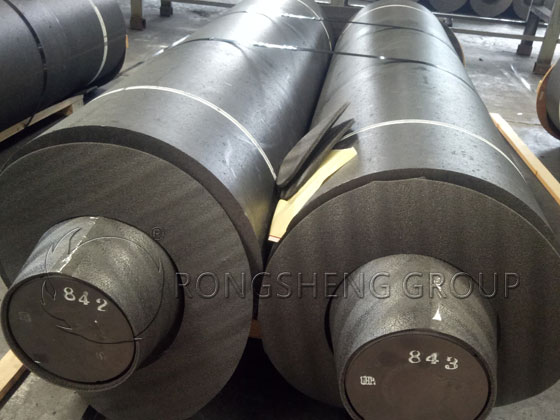
1. Graphite electrodes – Made from calcined needle coke that has been graphitized at 2800–3000°C. The carbon atoms arrange into a crystalline hexagonal structure. These are what Rongsheng manufactures for EAF steelmaking.
2. Carbon electrodes (non-graphitized) – Made from similar raw materials but baked only to 1200°C. The carbon remains amorphous (non-crystalline). These are cheaper but have higher resistivity and lower thermal shock resistance. Used in submerged arc furnaces for ferroalloys.
3. Carbon paste electrodes (Söderberg) – Self-baking electrodes where paste is fed into a metal casing and bakes during operation. Common in older or very large submerged arc furnaces.
4. Specialty carbon electrodes – Includes glassy carbon, carbon fiber, and carbon-polymer composites for batteries, sensors, and laboratory use.
So what does carbon electrodes meaning include in industrial practice? Most often, it refers to non-graphitized carbon electrodes (category #2 above) used in submerged arc furnaces. However, many people (including procurement documents) use “carbon electrode” and “graphite electrode” interchangeably. This is technically incorrect but commercially common.
Rongsheng’s position: We manufacture true graphite electrodes (graphitized), not carbon electrodes. But we understand the terminology confusion. When a customer asks for carbon electrodes meaning in a quote request, we clarify: Are you asking for baked carbon (amorphous) or graphitized carbon (crystalline)? The price difference is significant.
Key distinction table:
| Property | Carbon Electrode (Baked) | Graphite Electrode (Rongsheng) |
|---|---|---|
| Maximum treatment temperature | 1200°C | 3000°C |
| Electrical resistivity | 10–15 µΩ·m | 5–9 µΩ·m (depending on grade) |
| Crystal structure | Amorphous | Crystalline (hexagonal) |
| Typical application | Submerged arc furnaces (ferroalloys) | EAF steelmaking, ladle furnaces |
| Relative price | Lower | Higher |
UHP Graphite Electrode Price: What Drives the Numbers
Now let’s address the commercial reality: uhp graphite electrode price. UHP (Ultra-High Power) represents the premium end of the graphite electrode market. Prices fluctuate based on five key factors:
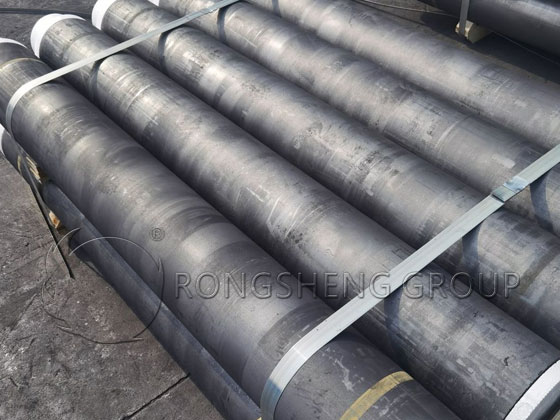
Factor 1: Raw material cost (40–50% of final price)
UHP requires premium calcined needle coke from a limited number of global refiners. Needle coke prices follow crude oil and delayed coker utilization rates. In tight markets, needle coke can reach $2,000–3,000 per ton. Lower-grade coke (for RP/HP) costs significantly less.
Factor 2: Energy consumption (15–20% of final price)
Graphitization consumes 3,000–4,000 kWh per ton of electrode. In regions with high industrial electricity rates, this alone adds $300–500 per ton to uhp graphite electrode price. Rongsheng’s location offers competitive power costs.
Factor 3: Diameter and length
Larger diameters require more raw material per electrode, larger extrusion presses, and longer graphitization cycles. A 700mm UHP electrode costs 40–60% more per ton than a 300mm UHP electrode—not because the material is different, but because production yield is lower (more rejects) and cycle times longer.
Factor 4: Thread specification
ISO standard threads are cheapest. Customer-specific threads (non-standard taper, length, or pitch) require custom tooling and slower machining. Add 5–10% for custom threading.
Factor 5: Quantity and delivery terms
Container-load quantities (20–25 metric tons) achieve the lowest per-ton uhp graphite electrode price. Partial pallets or LCL (less than container load) shipments add 15–25% for logistics.
Current market context (2024–2025):
-
UHP 300mm (ISO standard): Approximately $4,500–5,500 per ton FOB China
-
UHP 450mm (ISO standard): Approximately $5,000–6,000 per ton FOB China
-
UHP 600mm+ (custom): Quote basis
How to get accurate UHP graphite electrode price quotes: Provide diameter, grade (UHP), length (1,800mm, 2,100mm, 2,400mm, or 2,700mm), thread standard (ISO, ASTM, JIS, or customer), quantity (tons per month), and delivery port. Rongsheng returns a firm quote within 24 hours.
Pencil Graphite Electrode Means: Laboratory and Educational Context
Now for the most unexpected keyword: pencil graphite electrode means. Unlike industrial electrodes, a pencil “electrode” refers to a simple graphite rod (like a pencil lead) used in small-scale electrochemistry.
What pencil graphite electrode means in practice:
-
Material: Extruded graphite rod, typically 0.5–5mm diameter, 50–150mm length
-
Purity: Lower than industrial electrodes (often contains clay binders unless specified as “pure graphite”)
-
Applications: Student electrochemistry experiments (electrolysis of water), DIY battery research, corrosion testing, and some analytical chemistry (voltammetry)
-
Cost: Pennies per unit versus thousands of dollars per ton for industrial electrodes
Important distinction: A pencil graphite electrode means something completely different from an industrial UHP electrode. The pencil version:
-
Cannot handle high current (milliamps vs. thousands of amps)
-
Will disintegrate above 500°C (UHP operates at 3000°C)
-
Has no threading or mechanical strength
-
Is not manufactured by companies like Rongsheng (we produce industrial-scale electrodes only)
Why do people search for this? Typically students, hobbyists, or early-career researchers setting up low-cost electrochemical cells. We receive occasional inquiries asking if a pencil lead can substitute for an industrial electrode. The answer: No, not for any furnace application. For a classroom electrolysis demonstration? Possibly, but use appropriate safety precautions.
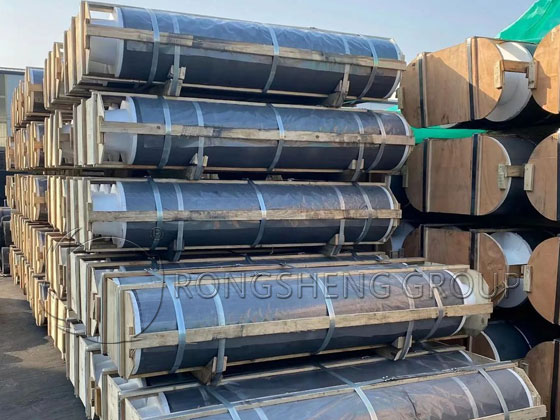
Connecting the Three: From Pencil to UHP Factory
Let’s step back and see the full spectrum:
| Keyword | Scale | User Intent | Rongsheng Relevance |
|---|---|---|---|
| Carbon electrodes meaning | Industrial (non-graphitized) | Procurement, engineering | We clarify terminology; we sell graphitized only |
| UHP graphite electrode price | Industrial (premium graphitized) | Procurement, financial planning | Direct manufacturer; firm quotes within 24 hours |
| Pencil graphite electrode means | Laboratory/educational (milli-amp scale) | Students, hobbyists, researchers | Not our product; we explain the difference |
Why Terminology Matters for Your Bottom Line
Confusing carbon electrodes meaning (amorphous, baked) with graphite electrodes (crystalline, graphitized) can cost your operation dearly. Consider:
-
If you need graphite but buy carbon: Higher resistivity means higher energy consumption. You might save 20% on electrode price but pay 15% more in electricity per ton of steel. Net loss.
-
If you need carbon but buy graphite: You’ve over-specified. Graphite costs 30–50% more than carbon for submerged arc furnace applications where amorphous carbon works fine.
What uhp graphite electrode price includes that cheap electrodes skip:
-
Premium needle coke (not regular calcined petroleum coke)
-
Double impregnation (not single)
-
Extended graphitization cycle (not rushed)
-
100% ultrasonic testing (not batch sampling)
What pencil graphite electrode means for Rongsheng: It means we sometimes need to educate potential customers about the difference between laboratory-scale graphite and industrial-scale graphite. We’re happy to do so.
Rongsheng’s Position Across These Keywords
Rongsheng specializes in industrial graphite electrodes (RP, HP, UHP) for EAF steelmaking, ladle furnaces, and submerged arc furnaces. We do not manufacture:
-
Non-graphitized carbon electrodes
-
Pencil graphite electrodes
-
Laboratory or hobbyist electrodes
What we do:
-
Produce UHP graphite electrodes from 300mm to 700mm
-
Provide transparent uhp graphite electrode price quotes with batch traceability
-
Clarify carbon electrodes meaning for customers comparing options
-
Explain pencil graphite electrode means when asked (as a courtesy)
UHP Graphite Electrode Price
Understanding the meaning of carbon electrodes prevents specification errors. Knowing the UHP graphite electrode price drivers helps you budget accurately. Recognizing what a pencil graphite electrode means avoids unrealistic expectations. Rongsheng provides clarity across all three—even when the product isn’t ours.
Need a transparent UHP graphite electrode price quote with full specification documentation? Contact Rongsheng today with your diameter, grade, and quantity requirements.